PUBLIC BUILD LOG

Viking Rise automation updates.
More progress. Less routine work.

Follow new workflow capabilities, real demonstrations and improvements to the VRA experience as we prepare for launch.

Launch pricing announced

VRA launch pricing is here — from $11.99/month.

Personal farming. Professional operations. One VRA engine. We are announcing three monthly launch plans, a seven-day no-card trial at launch, and an Operator workspace built around customers—not just emulator windows.

  • Personal — $11.99 USD/month: one licensed Windows installation, no artificial cap on configured personal farms, and all standard automations supported by the released build. Hardware and compatibility limits still apply.
  • Operator 25 — $29.99 USD/month: everything in Personal plus 25 configured managed farm slots, customer workspaces, policies, attention queues, service packages, reviewed work records and branded reports.
  • Operator 100 — $59.99 USD/month: the same professional toolkit with 100 configured managed farm slots. Customer labels are not the billing unit; both Operator plans cover one licensed installation.
  • The farming engine is included: explore the 26 published development workflows and their supported options—from research, training and gathering to rewards, healing, upgrades and exploration. Final release compatibility and account prerequisites apply.
  • Try it first: seven days free when access opens, with no card required. Operator evaluation includes up to 25 managed slots. Joining the waitlist does not start a trial or make a purchase.
  • Built for operators: organise customer status, notes and routines; preview bulk runs; review recorded work; export branded reports. Your customer service rates are separate from VRA subscription prices. No automatic charging or invented coverage metrics.
  • Clear boundaries: staff accounts, remote management, hosted compute, API/webhooks, customer portals, billing integrations and pooled multi-host allowances are not included launch features. Annual and founder offers are not being announced.
Prices are announced; access comes next. VRA remains pre-release, with no public installer, checkout or launch date. Prices are USD/month; applicable tax treatment and paid billing terms will be displayed before any purchase. Automation can carry account penalties; no account-safety, income or reliability guarantee is made.
Demonstration and practical setup

Watch a real training run. Prepare your own farms.

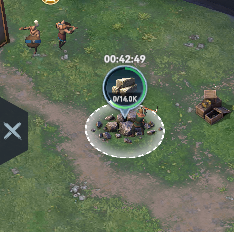
See the actual VRA interface and Viking Rise game from the same verified troop-training run, then use our free multi-farm PC checklist to plan a controlled setup. We would also like to hear what makes your current farm routine frustrating.

  • Real demonstration: the 23 September recording shows a normal Infantry training start and the resulting active queue. Annotations explain the controls; playback speed and omitted waits are disclosed.
  • A clearer next step: the homepage now places the demonstration beside the signup form, with testing news and the planned free seven-day launch trial clearly explained.
  • Free setup resource: a printable multi-farm PC checklist covers emulator mapping, capacity, routine boundaries and outcome checks. No email is required to read it.
  • Help shape the build: reply to this update and tell us the most frustrating part of managing your Viking Rise farms. Please do not send passwords, account identifiers or private screenshots.
Recorded on 23 September: VRA configures Infantry training, starts the normal queue and verifies the result. Join the waitlist for testing news and the planned seven-day launch trial.
Custom Sector Vision milestone

Sharper vision. Built for the living city.

ILLUSTRATED DEVELOPMENT NOTES

Inside the dataset. Beyond the reference image.

Here is what the Sector Vision work actually looks like: real Viking Rise captures, carefully placed target labels, and examples that challenge the easiest assumptions.

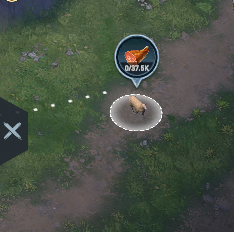
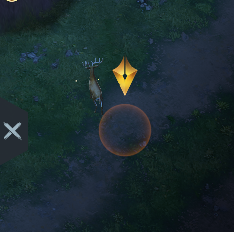
Follow the body—not the guide — real Viking Rise training cropREVIEWED TRAINING LABEL
Follow the body—not the guide

The deer has moved. Its reviewed box follows the animal rather than the gold marker.

Teach the difficult poses — real Viking Rise training cropREVIEWED TRAINING LABEL
Teach the difficult poses

Small, turning and end-on sheep need examples too—not just the easiest side view.

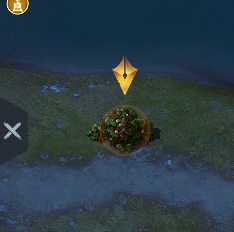
Learn the object in context — real Viking Rise training cropREVIEWED TRAINING LABEL
Learn the object in context

The bush is labelled separately from the surrounding ground, shadow and interface.

Animal bodyResource patchThese are reviewed labels—not model predictions or an accuracy claim.
See three more examples: timber, ore and chest distractors
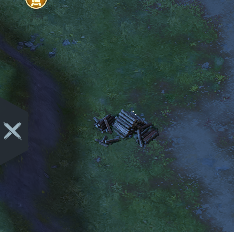
Broaden the resource lesson — real Viking Rise training cropREVIEWED TRAINING LABEL
Broaden the resource lesson

Timber adds another material shape, beyond berries and mineral piles.

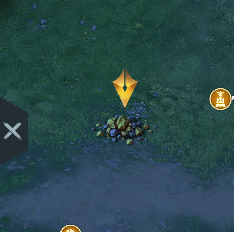
Different materials, different appearances — real Viking Rise training cropREVIEWED TRAINING LABEL
Different materials, different appearances

Ore and stone examples help challenge a model beyond one resource texture.

Knowing what not to select matters — real Viking Rise training cropREVIEWED TRAINING LABEL
Knowing what not to select matters

The material pile is labelled. The chest and people beside it are not targets for this detector.

Why we went beyond templates

City Event Reports brings moving animals, changing light and varied resources into view. We built a focused detector-training pipeline to learn those visual patterns and follow the current target as the scene changes.

What the weights learn

The model’s weights are learned numerical parameters, adjusted as predictions are compared with reviewed labels. They help it learn appearance patterns rather than require an identical screenshot. Saved checkpoints let us compare model versions on a consistent evaluation set.

Progress is more than a training score

We separate training, validation and test examples, check the exported model against its reference, and keep action permissions outside the model. Deer and sheep are represented in the animal data; resources include berries, timber, ore/material piles and fishing spots. Broader live qualification is still in progress.

Open the interactive training notebookAll 11 examples, raw/label toggles, weights and validation explained
  • Broader visual coverage: expanded recognition examples across deer, sheep, berry bushes, ore, timber and material piles, including different poses, scenery and lighting.
  • Moving-target awareness: added multi-frame animal acquisition and body tracking so a moving target can be followed beyond its original guide marker. Controlled development trials verified collection starting on a deer and a sheep.
  • On-device recognition: completed a local inference and model-export pipeline, with independent checks that the exported model reproduces its reference predictions. This experiment does not require a cloud model call for each screenshot.
  • Stronger evaluation: expanded reviewed captures, kept complete run sequences together and reserved a separate farm for testing. Fresh report captures have also been inspected with recognition overlays.
  • Controlled model rollout: model versions remain separate from action permissions. Experimental recognition does not authorise spending, bypass workflow rules or silently replace a running model.
Completed milestone: a local recognition pipeline and bounded animal trials. Expanded resource recognition is the next validation focus in this pre-release build.
Navigation, safeguards and runtime

More deliberate inputs. Clearer control.

Alongside recognition, we have completed another pass on the machinery that turns a screen observation into a farm action: report entry, city recognition, navigation checks, update preparation and recoverable development tooling.

  • City Event navigation: verified report entry, three consecutive Go routes and return to the city in the live validation console. This navigation check is kept distinct from collecting the routed objects.
  • Badge-aware city recognition: added a focused reference for the report control with its notification badge and improved selection between overlapping visual matches, improving recognition of the return-to-city state.
  • Camera-transition safeguards: blocked blank-map focus input when a current guide is not established. Observation-only validation now prohibits both target activation and map-focus taps at the execution boundary.
  • Targeted speed work: reduced unnecessary status reading and repeated screen-classification work in the investigated report path, while retaining fresh observations and effect verification. Recognition time and total workflow time are measured separately.
  • Versioned development updates: exercised preparation and loading of changed workflow packages at new run boundaries without restarting the backend or emulator for each source change.
  • Recoverable model tooling: preserved useful checkpoints, completed evaluation and export without restarting training from scratch, and hardened progress-file handling against temporary Windows file locks.
  • One evidence trail: navigation, attempted inputs, verified effects and final screen state remain connected to the same farm and action. Existing workflow regression checks passed alongside the added observation-only safeguards.
These changes extend the farm growth, rewards, recruitment and march milestones below, with acceptance testing continuing across supported game states.
Website and customer preparation

A clearer home for everything VRA.

The public VRA experience now brings the product direction, detailed workflow options, support material and development updates together on its dedicated domain—making it easier to understand the planned release before joining the waitlist.

  • Dedicated VRA home: moved the public experience to vra.youngstudio.uk, with the previous Young Studio website addresses redirecting to the matching VRA pages.
  • Deeper product detail: expanded the feature comparison and workflow-option explanations, with supporting pages for how VRA works, its evidence approach and its reliability boundaries.
  • Connected support: brought the changelog, support wiki, interface tour and waitlist journeys into the same navigation, including the evidence and model-improvement explanations.
  • Clearer learning roadmap: explained the planned opt-in customer-contribution system separately from our internal visual-model work and the later experimental model-control direction.
  • Automatic development updates: connected newly published build notes to the existing email digest for confirmed subscribers who opted into updates, with unsubscribe controls retained.
Website improvements are live, bringing the pre-release product tour, workflow reference and launch preparation together.
Live automation milestone

Real farm work. End-to-end action runs.

Since our last update, development has focused on running VRA against real farms, reviewing the screenshots and fixing what actually happens in-game. Successful end-to-end action runs now cover core farm growth, rewards, recruitment and march workflows—not just opening the right menu.

  • Troop training: verified all four troop types in one pass, preserving an existing Infantry queue and starting Pikemen, Archer and Porter training. Improved maximum-batch selection and handling of locked requested tiers.
  • Research: collected ready city outputs before starting a new project, verified the new research queue and requested assistance. Added active-queue handling to avoid starting a duplicate project.
  • Healing: verified collection, Infirmary entry, timed healing, assistance and return to the city. Separately checked the no-wounded path without sending an unnecessary Heal command.
  • Building upgrades: verified following a Chief’s Hall prerequisite into the required building, starting its timed upgrade, requesting assistance and closing the panel. An occupied construction queue is preserved.
  • Squad Base: verified filling an empty training-hero slot and collecting available experience before returning to the city.
  • Gathering: verified configured resource searches, target selection and actual squad departures, including a two-march run. Unsupported search levels are not silently substituted.
  • Recall: verified an eligible gathering squad beginning its journey home. Added and checked the empty-march-sidebar case so there is no unnecessary recall input.
  • Staging Post: completed three-mission action runs on two farms, covering mission navigation, support/rescue/attack paths, follow-up dialogue and available gifts. Dispatch does not require waiting for the entire battle to finish.
  • Commissions and Exploration: verified ready submissions, returned rewards and a new exploration departure in a completed action run. Requirement-reading work is reused when the displayed requirements have not changed.
Recorded action runs verify core farm workflows on development farms. Timed training, research and gathering continue through their normal in-game queues.
Rewards and daily upkeep

More collected. Fewer missed rewards.

The daily farm loop has received a detailed pass: claim what is ready, use only the configured resources, recognise when there is nothing to do, and leave paid options alone.

  • Prosperity Rewards: verified both free claims and their final cooldowns. Added bounded reopening when a promotion interrupts entry.
  • Mail Rewards: checked all five categories, verified available Claim All operations and returned to the city. Refined badge checks to distinguish the selected category from neighbouring tabs.
  • Quest Rewards and city collection: verified available quest claims and ready city-output collection, with reward screens inspected rather than relying on a success label alone.
  • Tribe Gifts: verified available claims across the three-category sweep. The separate large treasure chest has its own eligibility check.
  • Tribe Technology: repaired entry and recommendation selection, verified resource donations, and added bounded single and bulk donation handling. Exhausted donation allowance is recognised without premium spending.
  • Use Inventory: verified consuming seven configured resource stacks while retaining excluded Gems and Clan Bronze Coins. Improved recognition of sparsely populated inventory pages.
  • Skill Shop: fixed the missed bottom-row offer and verified its resource purchase, leaving gem-priced offers untouched. Unresolved visible offers are no longer treated as an exhausted shop.
  • Hero and Skill recruitment: verified both free summons and a separate cooldown-only run with no summon inputs. Improved handling of informational unlock notices and reward overlays.
  • Mercenary recruitment and Divination: verified available hires and repeated divinations while the required points remained available.
  • No-work and unavailable-item checks: verified already-staffed worker queues, an intact wall, unavailable owned shields and an excluded inventory buff.
These runs cover daily reward collection, configured resource use and checks that preserve work or items when no action is needed.
Speed, recovery and evidence

Less repeated work. Clearer outcomes.

Alongside the visible farm actions, we have improved the shared runtime: faster screen interpretation, safer reuse of the game connection and clearer reporting when a task starts, finishes, has nothing to do or needs inspection.

  • Targeted recognition: expanded our own focused screen crops for controls, building panels, resource cards, reward notices and recommendation markers, reducing interference from unrelated screen content.
  • Reduced OCR dependence: maximum troop batches and construction starts can use the relevant visible controls instead of requiring an exact quantity or countdown to be read. Resource quantities are not invented when unreadable.
  • Removed a repeated background-processing bottleneck and cached unchanged review data. Measured screen-control resolution became substantially faster in the investigated live sequence; this is not a whole-routine speed guarantee.
  • Faster connection reuse: an already-running compatible game helper is now found and reused correctly, with safer version and process checks and coordinated cache updates across farms.
  • Startup observation: followed a fresh game load through its loading screens, preserving the normal startup sequence.
  • Interruption handling: improved recovery around promotions, reward animations, introductory dialogue and unlock notices while keeping an unfinished claim distinct from a navigation retry.
  • More honest results: city collection and assistance are reported separately from starting research or healing. Opening a cargo panel is not itself treated as collecting its contents.
  • Safer retries: uncertain effects stop for inspection instead of blindly replaying a potentially completed action. Existing queues, unselected resources and paid controls remain protected.
  • Evidence-led validation: reviewed before-and-after screenshots alongside action logs and reran the existing workflow checks.
  • One execution path: the validation console, routines and fleet scheduling use the same current workflow engine. Continued work targets remaining game variants and longer concurrent runs before publishing fleet-wide reliability figures.
Next development focus: broader City Event coverage, additional game-state checks and longer concurrent farm routines.
Public product story

Evidence-first website and support system

Brought verified outcomes, inspectable evidence and customer self-service into the public VRA experience.

  • Named VRA Evidence as a primary product capability.
  • Added interactive explanations of farm execution and action evidence.
  • Published the 28-article support wiki, seven-day trial explanation and linkable resources.
  • Added Reliability Lab methodology and a public build-in-progress board.
Website milestone covering the product explanation and support experience.
Engineering checkpoint

Terminal-state and navigation qualification

Improved terminal-state recognition, navigation and controlled recovery during one-farm qualification.

  • Hardened recognition of completed, active, unavailable and uncertain terminal states.
  • Reconciled navigation after known interruptions instead of reporting a closed menu as success.
  • Added bounded handling for the recurring Kings Decree dialogue.
  • Qualified one-farm execution paths and refined the shared workflow catalogue.
Internal workflow qualification milestone in the pre-release development programme.
Engineering checkpoint

Reward verification and no-claim states

Improved reward workflows so claimable, already-claimed and animated outcomes are classified separately.

  • Recognised Mail no-claim terminals across supported categories.
  • Made Prosperity claim outcomes causal and reduced unnecessary waiting.
  • Waited for settled chest panels and reward animations before return.
  • Recorded operator acceptance evidence for the then-tested Prosperity path.
Reward checks continue across supported game states and interface variants.
Engineering checkpoint

Recovery paths and building actions

Expanded controlled recovery around building invocation, walls, recruitment and exploration.

  • Added exact building-function recovery paths.
  • Used current semantic building navigation where available.
  • Qualified the intact-wall no-action terminal.
  • Separated free Hero and Skill recruitment from paid controls.
  • Prevented swallowed promotion-close input from falling through.
Development changes; customer release scope remains governed by current validation.
0.9.57 candidate

Limited unsigned beta candidate prepared

Prepared a customer-profile build, installer/portable artefacts and commercial support surfaces for Windows acceptance.

  • The smaller catalogue available at that checkpoint used bounded reliability contracts.
  • Customer profile physically separated from development/model-lab modules.
  • First-run setup, Environment Health, GnBots migration, licensing and support bundle present.
  • Defender checks and manifest/SBOM gates passed for the frozen artefacts.
Historical checkpoint; the active catalogue has since expanded. It was not a general public release.

FOLLOW THE BUILD

Explore the progress behind VRA.

See the working foundations, current development and planned launch experience.

Open the development board

FOLLOW THE LAUNCH

Ready to hear when VRA opens?

Join for development, testing and launch updates. VRA remains pre-release; signup is not a purchase, trial activation or guaranteed beta place.

Follow the build with the VRA community.

Join us on Discord ↗